Cognitive Neuroscience Society

The Journal of Cognitive Neuroscience

  • Home
  • Annual Meeting
    • General Information
      • CNS Donation Page
      • CNS 2027 Annual Meeting
      • Code of Conduct
      • Accessibility at CNS
      • Dates and Deadlines
      • Inspire Discovery: Sponsor a Travel Award
      • Annual Meeting Workshop Policy & Application
      • Networking
      • Exhibit with Us!
    • Program
      • Previous Meetings Programs & Abstracts
    • Attendee Resources
      • Venue Information
      • International Travelers
    • Hotel
      • Hotel Reservations
      • Student Hotel Reservations
    • Registration
      • Registration
      • Registration Policies, Cancellations & Refunds
      • Registration FAQ
    • Submissions
      • Submit a Symposium
      • Submit a Poster
      • Printed Poster Guidelines
      • Data Blitz
      • GSA or PFA Application
  • About CNS
    • Boards and Committees
    • CNS Diversity and Inclusion Statement
  • Membership
    • Information and Benefits
    • Join or Renew Membership
    • Membership FAQs
    • Newsletter
      • CNS Newsletters
      • Submit an Announcement
      • Newsletter FAQs
  • Awards
    • Travel Award
    • George A. Miller Award
    • The Distinguished Career Contributions Award
    • Young Investigator Award
    • Young Investigator Award Nominations
  • News Center
    • CNS Blog
    • CNS 2026 Press Room
    • CNS 2026 Blog
    • CNS 2025 Blog
    • CNS 2024 Blog
    • CNS 2023 Blog
    • CNS 2022 Blog
    • CNS 2021 Blog
    • CNS 2020 Blog
    • Blog Archives
    • Media Contact
  • CNS Archives
    • Conference Videos
    • Previous Meetings Programs & Abstracts
  • MY CNS
    • Account Login
    • Create an Account
  • Contact Us
post

One Foot in Psychology and One in Biology

February 23, 2015

copyright: Lisa M.P. Munoz

Q&A with Marta Kutas Marta Kutas has been smitten from the beginning with ERPs – event-related potentials, measures of electrical activity in the brain. She calls them “temporally exquisite instruments for investigating what the brain does – loosely, the mind.” Kutas, a cognitive neuroscientist at the University of California, San Diego, is this year’s recipient […]

By lmunoz Filed Under: Uncategorized Tagged With: cns 2015, eeg; marta kutas

post

Michael Gazzaniga on the Hard Work of Brain Science

February 9, 2015

“The memorable peaks in life come scattered among the many hard and often dreary days of work.” -Michael Gazzaniga In an interview with National Geographic on the occasion of his new book, Michael Gazzaniga, a founder of CNS, talks about his work on the “split brain,” his early years at Caltech, the nature of consciousness, […]

By lmunoz Filed Under: Uncategorized

post

Our Social Nature Keeps Us from Truly Zoning Out

January 31, 2015

On Twitter yesterday, social psychologist Amy Cuddy asked psychologists what theme they believe to be generally true about human nature. Among the great responses was this by social cognitive neuroscientist Jay Van Bavel: “We are social animals.” Indeed, in a new study, researchers have found that even when we are zoning out, we are preparing […]

By lmunoz Filed Under: Uncategorized

post

Beauty is in the Brain of the Beholder

January 21, 2015

The paintings of Paul Cézanne, whose birthday we celebrated this week, transport us to a different time and different place. His use of color and brushstroke force us to look at people and places in new ways. But any person’s evaluation of a single piece of art, of course, is subjective. While some may gravitate […]

By lmunoz Filed Under: Uncategorized Tagged With: anjan chatterjee, art, beauty, cns 2015, keynote

post

Why It Should Always Be the Season for Exercise

January 14, 2015

Guest Post by Michelle Voss, University of Iowa We all know that exercise is good for us And this past holiday season, the market was awash with activity monitors like the FitBit and Nike Fuel Band to help you reach your fitness goals from the neck down. But what about from the neck up? Although […]

By lmunoz Filed Under: Uncategorized Tagged With: aging, bdnf, exercise, mental health, physical activity

post

Judging Beauty in Places, Faces

January 12, 2015

Hubble Telescope

Seeing the new photos of the Pillars of Creation from the Hubble Telescope took my breath away. Beautiful and awe-inspiring. But what was happening in my brain when I looked at them? How and why we react to beauty is something we rarely think about, but neuroscientists are making progress in better understanding these processes. […]

By lmunoz Filed Under: Uncategorized Tagged With: anjan chatterjee, art, beauty, decision-making, faces

post

A Year in Cognitive Neuroscience: 10 Stories from 2014

December 29, 2014

Our round-up of some of the top CNS blog posts of the year, featuring a range of cognitive neuroscience, from new research on memory, learning, and language, to the importance of neuroscientists using Twitter. 1. If the CIA Tweets, Cognitive Neuroscientists Can Too: Harnessing Twitter’s Power for Your Research Micah Allen (@neuroconscience) talks about why […]

By lmunoz Filed Under: Uncategorized

post

Lessen Anticipated Pain With Your Imagination

December 15, 2014

Imagination is not just something for creative endeavors — it is a real-world tool that can not only shape the way we act in the future, but also affect how we feel right now. Think about the dread you feel the day before a tooth extraction, imagining the pain to come. New research finds that you […]

By lmunoz Filed Under: Uncategorized Tagged With: imagination, pain, senses

post

fNIRS: The In-Between for Brain Activity in Real-World Settings

December 8, 2014

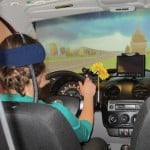
Guest Post by Nick Wan, Utah State University  Imagine driving in a simulator while undergoing an fMRI. No, you won’t be lying down — this is not your typical large, chamber-like scanner. An instrument called functional near-infrared spectroscopy, or fNIRS, is using a smaller, more portable design to record brain activity in more real-world settings. “It’s really that […]

By lmunoz Filed Under: Uncategorized Tagged With: driving, fMRI, fNIRS

post

Getting Past Dyslexia Myths: How Neuroscience Has Helped

November 28, 2014

Guest Post by Priya Kalra, Harvard University  Although scientists now understand dyslexia better than ever before, it is still a condition shrouded in myth and misunderstanding. I first came to see our flawed perceptions of dyslexia while tutoring a 4th grader. Despite normal intelligence and effort, he could not read. I saw how the frustration this caused […]

By lmunoz Filed Under: Uncategorized Tagged With: dyslexia, learning, reading

« Previous Page
Next Page »

Recent Posts

  • Borrowing from Improv to Decode Language in Everyday Conversation 
  • Computational Models Reveal Brain-Behavior Relationships in Adolescents
  • Brief Exposures to Nature Can Reset Attention, Especially for Nature Lovers 
  • Survival to Sustainability: Building a Career That Lasts
  • Down the Rashomon Hole: Reflections on Mapping Emotions in the Brain

Blog Archives

Contact

Cognitive Neuroscience Society
C/O Center for Mind and Brain
267 Cousteau Place
Davis, CA 95618
info@cogneurosociety.org

Recent Posts

  • Borrowing from Improv to Decode Language in Everyday Conversation 
  • Computational Models Reveal Brain-Behavior Relationships in Adolescents
  • Brief Exposures to Nature Can Reset Attention, Especially for Nature Lovers 
  • Survival to Sustainability: Building a Career That Lasts
  • Down the Rashomon Hole: Reflections on Mapping Emotions in the Brain

Archives

Blog Archives

Previous Meeting Programs and Abstracts

Past Newsletters

All contents © Cognitive Neuroscience Society 1995-2026